Showing posts with label Statues. Show all posts

Thursday, 6 June 2013

The Kissing Dinosaurs of Erenhot in China

North of China on the Sino-Mongolian border, near the town of Erenhot (also known as Erlian), you will find the statues of two towering Brontosauruses. The two dinosaurs are located on either side of the main highway, their long necks stretching to the other, until the two dinosaur's mouth meet as if to share a kiss. Each dinosaur statue is 34 meters wide and 19 meters high. The span of the two together reaches 80 meters. The ground near the kissing couple is littered with many dozen smaller statues of dinosaurs of all shapes and sizes.
Photo — Link
In the far north of China on the Sino-Mongolian border, near the town of Erenhot (also known as Erlian), you will find the statues of two towering Brontosauruses. The two dinosaurs are located on either side of the main highway, their long necks stretching to the other, until the two dinosaur's mouth meet as if to share a kiss. Each dinosaur statue is 34 meters wide and 19 meters high. The span of the two together reaches 80 meters. The ground near the kissing couple is littered with many dozen smaller statues of dinosaurs of all shapes and sizes.
Erenhot is located in the Gobi Desert, in the Xilin Gol league of the Inner Mongolia Autonomous Region. The city was established as the only train trade route between Inner and Outer Mongolia back in the 1950's, but the area has been gaining international attention since the 1920's with the discovery of dinosaur fossils in the Erlian Basin.
North of China on the Sino-Mongolian border, near the town of Erenhot (also known as Erlian), you will find the statues of two towering Brontosauruses. The two dinosaurs are located on either side of the main highway, their long necks stretching to the other, until the two dinosaur's mouth meet as if to share a kiss. Each dinosaur statue is 34 meters wide and 19 meters high. The span of the two together reaches 80 meters. The ground near the kissing couple is littered with many dozen smaller statues of dinosaurs of all shapes and sizes.
Photo — Link

Called the "Dinosaur City", Erenhot was once the home of dinosaurs. In the Cretaceous Period 70 million years ago, Erenhot was a paradise of lakes, marshes, and thick forests. More than 20 kinds of dinosaurs flourished there but the most famous is Gigantoraptor erlianensis, an 8 meter-long birdlike predator that was discovered in 2005.
Many fossils have been discovered in the area, including the biggest and best-preserved dinosaur fossil in Asia. Besides the scenic boulevard, the city also has a dinosaur museum and a theme park called “Dinosaur Fairyland”. The arch of the kissing dinosaurs was built in 2007 to showcase the region's reputation as a fossil hot-spot.

North of China on the Sino-Mongolian border, near the town of Erenhot (also known as Erlian), you will find the statues of two towering Brontosauruses. The two dinosaurs are located on either side of the main highway, their long necks stretching to the other, until the two dinosaur's mouth meet as if to share a kiss. Each dinosaur statue is 34 meters wide and 19 meters high. The span of the two together reaches 80 meters. The ground near the kissing couple is littered with many dozen smaller statues of dinosaurs of all shapes and sizes.
Photo — Link

North of China on the Sino-Mongolian border, near the town of Erenhot (also known as Erlian), you will find the statues of two towering Brontosauruses. The two dinosaurs are located on either side of the main highway, their long necks stretching to the other, until the two dinosaur's mouth meet as if to share a kiss. Each dinosaur statue is 34 meters wide and 19 meters high. The span of the two together reaches 80 meters. The ground near the kissing couple is littered with many dozen smaller statues of dinosaurs of all shapes and sizes.
Photo — Link

North of China on the Sino-Mongolian border, near the town of Erenhot (also known as Erlian), you will find the statues of two towering Brontosauruses. The two dinosaurs are located on either side of the main highway, their long necks stretching to the other, until the two dinosaur's mouth meet as if to share a kiss. Each dinosaur statue is 34 meters wide and 19 meters high. The span of the two together reaches 80 meters. The ground near the kissing couple is littered with many dozen smaller statues of dinosaurs of all shapes and sizes.
Photo — Link

North of China on the Sino-Mongolian border, near the town of Erenhot (also known as Erlian), you will find the statues of two towering Brontosauruses. The two dinosaurs are located on either side of the main highway, their long necks stretching to the other, until the two dinosaur's mouth meet as if to share a kiss. Each dinosaur statue is 34 meters wide and 19 meters high. The span of the two together reaches 80 meters. The ground near the kissing couple is littered with many dozen smaller statues of dinosaurs of all shapes and sizes.
Photo — Link

North of China on the Sino-Mongolian border, near the town of Erenhot (also known as Erlian), you will find the statues of two towering Brontosauruses. The two dinosaurs are located on either side of the main highway, their long necks stretching to the other, until the two dinosaur's mouth meet as if to share a kiss. Each dinosaur statue is 34 meters wide and 19 meters high. The span of the two together reaches 80 meters. The ground near the kissing couple is littered with many dozen smaller statues of dinosaurs of all shapes and sizes.
Photo — Link

North of China on the Sino-Mongolian border, near the town of Erenhot (also known as Erlian), you will find the statues of two towering Brontosauruses. The two dinosaurs are located on either side of the main highway, their long necks stretching to the other, until the two dinosaur's mouth meet as if to share a kiss. Each dinosaur statue is 34 meters wide and 19 meters high. The span of the two together reaches 80 meters. The ground near the kissing couple is littered with many dozen smaller statues of dinosaurs of all shapes and sizes.
Photo — Link

North of China on the Sino-Mongolian border, near the town of Erenhot (also known as Erlian), you will find the statues of two towering Brontosauruses. The two dinosaurs are located on either side of the main highway, their long necks stretching to the other, until the two dinosaur's mouth meet as if to share a kiss. Each dinosaur statue is 34 meters wide and 19 meters high. The span of the two together reaches 80 meters. The ground near the kissing couple is littered with many dozen smaller statues of dinosaurs of all shapes and sizes.
Photo — Link

North of China on the Sino-Mongolian border, near the town of Erenhot (also known as Erlian), you will find the statues of two towering Brontosauruses. The two dinosaurs are located on either side of the main highway, their long necks stretching to the other, until the two dinosaur's mouth meet as if to share a kiss. Each dinosaur statue is 34 meters wide and 19 meters high. The span of the two together reaches 80 meters. The ground near the kissing couple is littered with many dozen smaller statues of dinosaurs of all shapes and sizes.
Photo — Link

North of China on the Sino-Mongolian border, near the town of Erenhot (also known as Erlian), you will find the statues of two towering Brontosauruses. The two dinosaurs are located on either side of the main highway, their long necks stretching to the other, until the two dinosaur's mouth meet as if to share a kiss. Each dinosaur statue is 34 meters wide and 19 meters high. The span of the two together reaches 80 meters. The ground near the kissing couple is littered with many dozen smaller statues of dinosaurs of all shapes and sizes.
Photo — Link

North of China on the Sino-Mongolian border, near the town of Erenhot (also known as Erlian), you will find the statues of two towering Brontosauruses. The two dinosaurs are located on either side of the main highway, their long necks stretching to the other, until the two dinosaur's mouth meet as if to share a kiss. Each dinosaur statue is 34 meters wide and 19 meters high. The span of the two together reaches 80 meters. The ground near the kissing couple is littered with many dozen smaller statues of dinosaurs of all shapes and sizes.
Photo — Link

North of China on the Sino-Mongolian border, near the town of Erenhot (also known as Erlian), you will find the statues of two towering Brontosauruses. The two dinosaurs are located on either side of the main highway, their long necks stretching to the other, until the two dinosaur's mouth meet as if to share a kiss. Each dinosaur statue is 34 meters wide and 19 meters high. The span of the two together reaches 80 meters. The ground near the kissing couple is littered with many dozen smaller statues of dinosaurs of all shapes and sizes.
Photo — Link

North of China on the Sino-Mongolian border, near the town of Erenhot (also known as Erlian), you will find the statues of two towering Brontosauruses. The two dinosaurs are located on either side of the main highway, their long necks stretching to the other, until the two dinosaur's mouth meet as if to share a kiss. Each dinosaur statue is 34 meters wide and 19 meters high. The span of the two together reaches 80 meters. The ground near the kissing couple is littered with many dozen smaller statues of dinosaurs of all shapes and sizes.
Photo — Link

North of China on the Sino-Mongolian border, near the town of Erenhot (also known as Erlian), you will find the statues of two towering Brontosauruses. The two dinosaurs are located on either side of the main highway, their long necks stretching to the other, until the two dinosaur's mouth meet as if to share a kiss. Each dinosaur statue is 34 meters wide and 19 meters high. The span of the two together reaches 80 meters. The ground near the kissing couple is littered with many dozen smaller statues of dinosaurs of all shapes and sizes.
Photo — Link
Link — 1 2 3

Wednesday, 17 April 2013

Christ of the Abyss

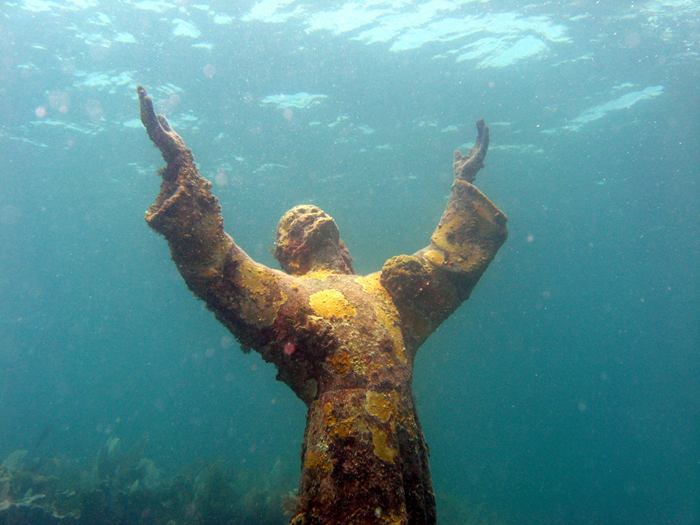
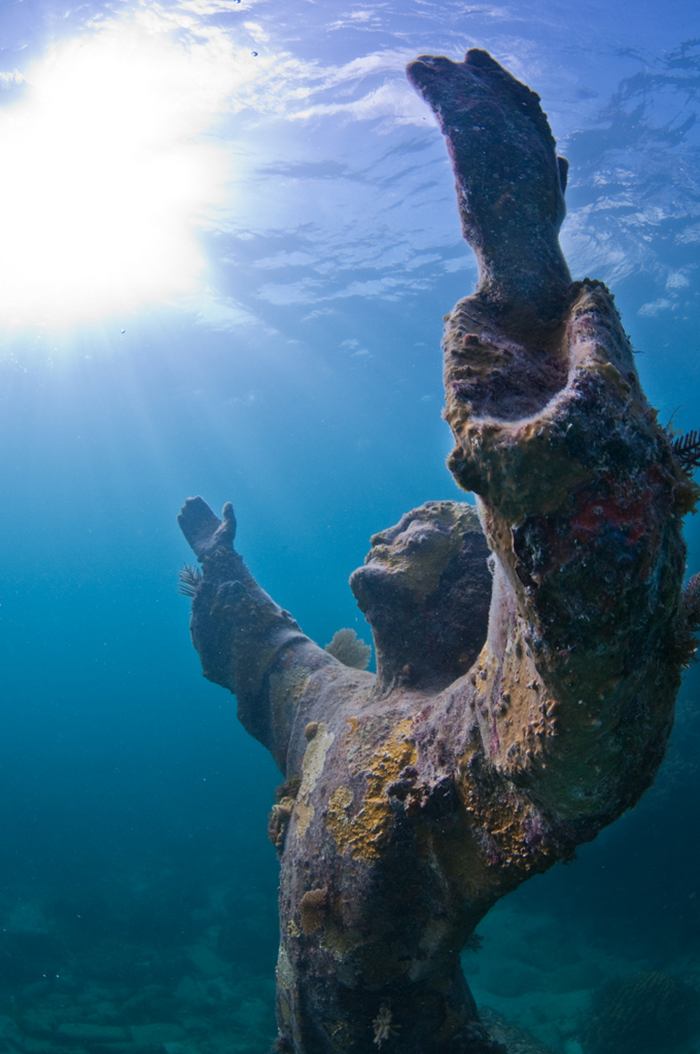
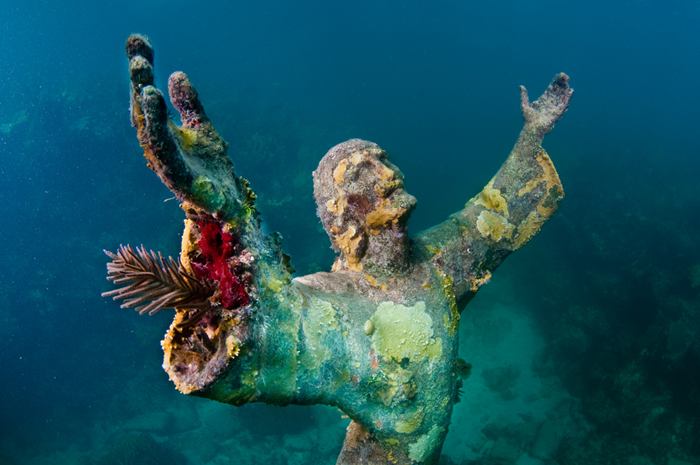
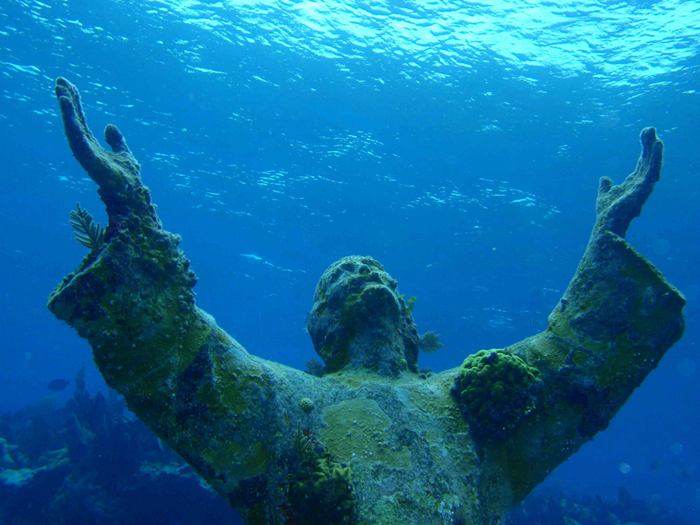
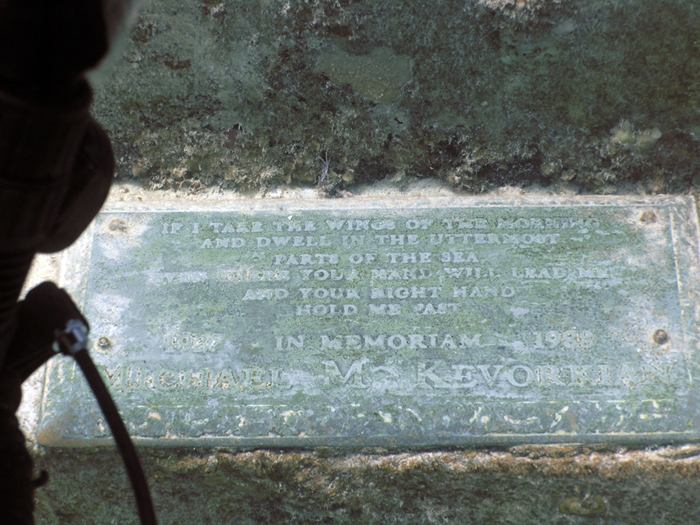
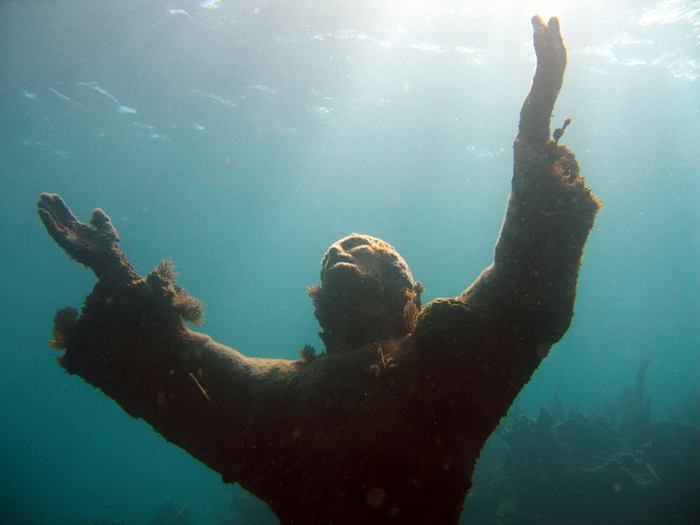
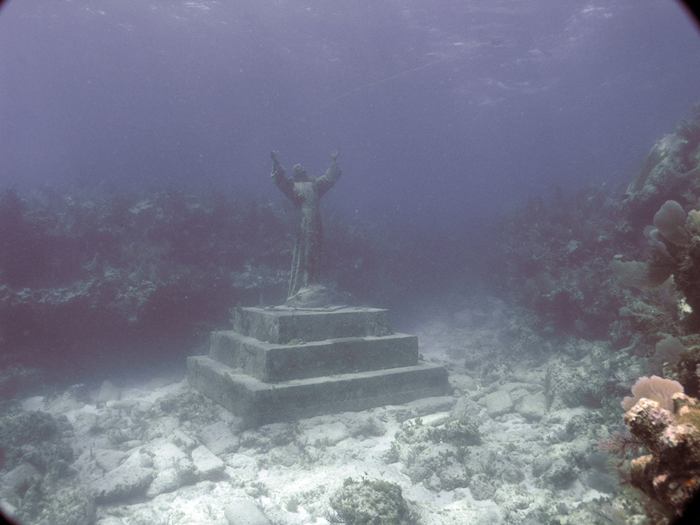
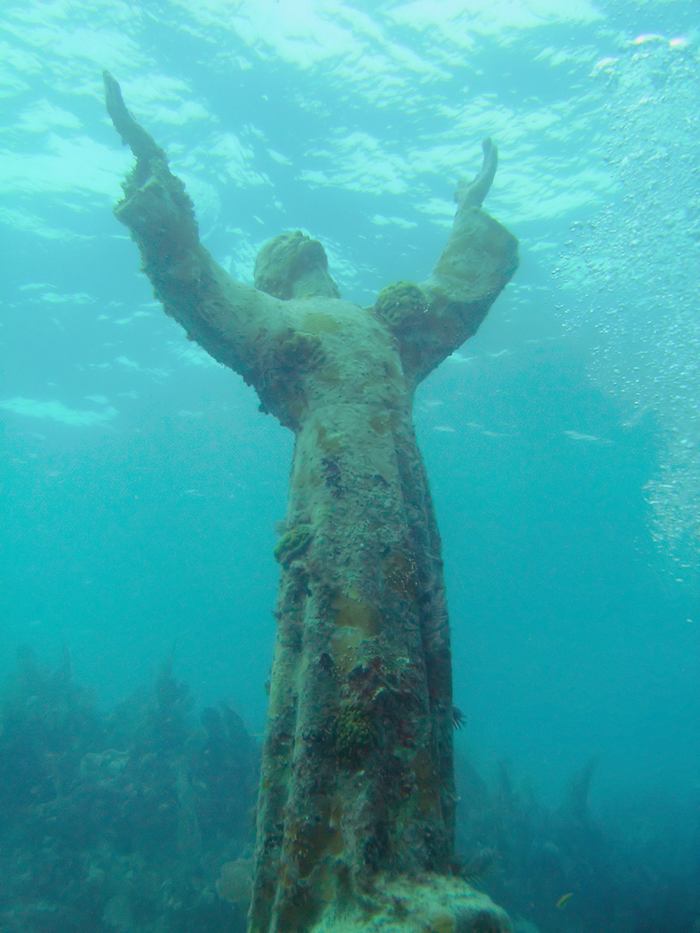
Christ of the Abyss is a submerged bronze statue of Jesus, of which the original is located in the Mediterranean Sea off San Fruttuoso between Camogli and Portofino on the Italian Riviera. It was placed in the water on 22 August 1954 at approximately 17 metres depth, and stands c. 2.5 metres tall. Various other casts of the statue are located in other places worldwide, both underwater and in churches and museums. The sculpture was created by Guido Galletti after an idea of Italian diver Duilio Marcante. The statue was placed near the spot where Dario Gonzatti, the first Italian to use SCUBA gear, died in 1947. It depicts Christ offering a blessing of peace, with his head and hands raised skyward.
Photo — Link

Due to increasing amounts of corrosion and the growth of crustaceans, the statue was removed from the water and restored in 2003. A hand that had been detached by an anchor was also replaced. The statue was returned to the water with a new base on 17 July 2004. A second bronze sculpture cast from the same mould exists off the coast of St. George's, Grenada. This was a gift of the navy of Genoa for assistance in rescuing the crew of Italian vessel Bianca C destroyed by fire in the port of St. George's. The sculpture was placed under water on October 22, 1961.
Christ of the Abyss is a submerged bronze statue of Jesus, of which the original is located in the Mediterranean Sea off San Fruttuoso between Camogli and Portofino on the Italian Riviera. It was placed in the water on 22 August 1954 at approximately 17 metres depth, and stands c. 2.5 metres tall. Various other casts of the statue are located in other places worldwide, both underwater and in churches and museums. The sculpture was created by Guido Galletti after an idea of Italian diver Duilio Marcante. The statue was placed near the spot where Dario Gonzatti, the first Italian to use SCUBA gear, died in 1947. It depicts Christ offering a blessing of peace, with his head and hands raised skyward.
Photo — Link

A third bronze from the original mould was presented to the Underwater Society of America in New York in 1962. On August 25, 1965 it was placed approximately in 25 feet of water off the coast of Key Largo, Florida. It is located around Dry Rocks, around six miles east of Key Largo in the John Pennekamp Coral Reef State Park. While the statue weighs around 260 kg, the concrete base to which it is attached weighs about 9 tons. The original clay statue minus the hands was located in a foundry in 1993. This is now on display with replacement hands at the National Museum of Underwater Activities in Ravenna, Italy. Wiki
Christ of the Abyss is a submerged bronze statue of Jesus, of which the original is located in the Mediterranean Sea off San Fruttuoso between Camogli and Portofino on the Italian Riviera. It was placed in the water on 22 August 1954 at approximately 17 metres depth, and stands c. 2.5 metres tall. Various other casts of the statue are located in other places worldwide, both underwater and in churches and museums. The sculpture was created by Guido Galletti after an idea of Italian diver Duilio Marcante. The statue was placed near the spot where Dario Gonzatti, the first Italian to use SCUBA gear, died in 1947. It depicts Christ offering a blessing of peace, with his head and hands raised skyward.
Photo — Link
Christ of the Abyss is a submerged bronze statue of Jesus, of which the original is located in the Mediterranean Sea off San Fruttuoso between Camogli and Portofino on the Italian Riviera. It was placed in the water on 22 August 1954 at approximately 17 metres depth, and stands c. 2.5 metres tall. Various other casts of the statue are located in other places worldwide, both underwater and in churches and museums. The sculpture was created by Guido Galletti after an idea of Italian diver Duilio Marcante. The statue was placed near the spot where Dario Gonzatti, the first Italian to use SCUBA gear, died in 1947. It depicts Christ offering a blessing of peace, with his head and hands raised skyward.
Photo — Link
Christ of the Abyss is a submerged bronze statue of Jesus, of which the original is located in the Mediterranean Sea off San Fruttuoso between Camogli and Portofino on the Italian Riviera. It was placed in the water on 22 August 1954 at approximately 17 metres depth, and stands c. 2.5 metres tall. Various other casts of the statue are located in other places worldwide, both underwater and in churches and museums. The sculpture was created by Guido Galletti after an idea of Italian diver Duilio Marcante. The statue was placed near the spot where Dario Gonzatti, the first Italian to use SCUBA gear, died in 1947. It depicts Christ offering a blessing of peace, with his head and hands raised skyward.
Photo — Link
Christ of the Abyss is a submerged bronze statue of Jesus, of which the original is located in the Mediterranean Sea off San Fruttuoso between Camogli and Portofino on the Italian Riviera. It was placed in the water on 22 August 1954 at approximately 17 metres depth, and stands c. 2.5 metres tall. Various other casts of the statue are located in other places worldwide, both underwater and in churches and museums. The sculpture was created by Guido Galletti after an idea of Italian diver Duilio Marcante. The statue was placed near the spot where Dario Gonzatti, the first Italian to use SCUBA gear, died in 1947. It depicts Christ offering a blessing of peace, with his head and hands raised skyward.
Photo — Link
Christ of the Abyss is a submerged bronze statue of Jesus, of which the original is located in the Mediterranean Sea off San Fruttuoso between Camogli and Portofino on the Italian Riviera. It was placed in the water on 22 August 1954 at approximately 17 metres depth, and stands c. 2.5 metres tall. Various other casts of the statue are located in other places worldwide, both underwater and in churches and museums. The sculpture was created by Guido Galletti after an idea of Italian diver Duilio Marcante. The statue was placed near the spot where Dario Gonzatti, the first Italian to use SCUBA gear, died in 1947. It depicts Christ offering a blessing of peace, with his head and hands raised skyward.
Photo — Link
Christ of the Abyss is a submerged bronze statue of Jesus, of which the original is located in the Mediterranean Sea off San Fruttuoso between Camogli and Portofino on the Italian Riviera. It was placed in the water on 22 August 1954 at approximately 17 metres depth, and stands c. 2.5 metres tall. Various other casts of the statue are located in other places worldwide, both underwater and in churches and museums. The sculpture was created by Guido Galletti after an idea of Italian diver Duilio Marcante. The statue was placed near the spot where Dario Gonzatti, the first Italian to use SCUBA gear, died in 1947. It depicts Christ offering a blessing of peace, with his head and hands raised skyward.
Photo — Link
Christ of the Abyss is a submerged bronze statue of Jesus, of which the original is located in the Mediterranean Sea off San Fruttuoso between Camogli and Portofino on the Italian Riviera. It was placed in the water on 22 August 1954 at approximately 17 metres depth, and stands c. 2.5 metres tall. Various other casts of the statue are located in other places worldwide, both underwater and in churches and museums. The sculpture was created by Guido Galletti after an idea of Italian diver Duilio Marcante. The statue was placed near the spot where Dario Gonzatti, the first Italian to use SCUBA gear, died in 1947. It depicts Christ offering a blessing of peace, with his head and hands raised skyward.
Photo — Link
Christ of the Abyss is a submerged bronze statue of Jesus, of which the original is located in the Mediterranean Sea off San Fruttuoso between Camogli and Portofino on the Italian Riviera. It was placed in the water on 22 August 1954 at approximately 17 metres depth, and stands c. 2.5 metres tall. Various other casts of the statue are located in other places worldwide, both underwater and in churches and museums. The sculpture was created by Guido Galletti after an idea of Italian diver Duilio Marcante. The statue was placed near the spot where Dario Gonzatti, the first Italian to use SCUBA gear, died in 1947. It depicts Christ offering a blessing of peace, with his head and hands raised skyward.
Photo — Link
Christ of the Abyss is a submerged bronze statue of Jesus, of which the original is located in the Mediterranean Sea off San Fruttuoso between Camogli and Portofino on the Italian Riviera. It was placed in the water on 22 August 1954 at approximately 17 metres depth, and stands c. 2.5 metres tall. Various other casts of the statue are located in other places worldwide, both underwater and in churches and museums. The sculpture was created by Guido Galletti after an idea of Italian diver Duilio Marcante. The statue was placed near the spot where Dario Gonzatti, the first Italian to use SCUBA gear, died in 1947. It depicts Christ offering a blessing of peace, with his head and hands raised skyward.
Photo — Link
Christ of the Abyss is a submerged bronze statue of Jesus, of which the original is located in the Mediterranean Sea off San Fruttuoso between Camogli and Portofino on the Italian Riviera. It was placed in the water on 22 August 1954 at approximately 17 metres depth, and stands c. 2.5 metres tall. Various other casts of the statue are located in other places worldwide, both underwater and in churches and museums. The sculpture was created by Guido Galletti after an idea of Italian diver Duilio Marcante. The statue was placed near the spot where Dario Gonzatti, the first Italian to use SCUBA gear, died in 1947. It depicts Christ offering a blessing of peace, with his head and hands raised skyward.
Photo — Link
Christ of the Abyss is a submerged bronze statue of Jesus, of which the original is located in the Mediterranean Sea off San Fruttuoso between Camogli and Portofino on the Italian Riviera. It was placed in the water on 22 August 1954 at approximately 17 metres depth, and stands c. 2.5 metres tall. Various other casts of the statue are located in other places worldwide, both underwater and in churches and museums. The sculpture was created by Guido Galletti after an idea of Italian diver Duilio Marcante. The statue was placed near the spot where Dario Gonzatti, the first Italian to use SCUBA gear, died in 1947. It depicts Christ offering a blessing of peace, with his head and hands raised skyward.
Photo — Link
Christ of the Abyss is a submerged bronze statue of Jesus, of which the original is located in the Mediterranean Sea off San Fruttuoso between Camogli and Portofino on the Italian Riviera. It was placed in the water on 22 August 1954 at approximately 17 metres depth, and stands c. 2.5 metres tall. Various other casts of the statue are located in other places worldwide, both underwater and in churches and museums. The sculpture was created by Guido Galletti after an idea of Italian diver Duilio Marcante. The statue was placed near the spot where Dario Gonzatti, the first Italian to use SCUBA gear, died in 1947. It depicts Christ offering a blessing of peace, with his head and hands raised skyward.
Photo — Link
Christ of the Abyss is a submerged bronze statue of Jesus, of which the original is located in the Mediterranean Sea off San Fruttuoso between Camogli and Portofino on the Italian Riviera. It was placed in the water on 22 August 1954 at approximately 17 metres depth, and stands c. 2.5 metres tall. Various other casts of the statue are located in other places worldwide, both underwater and in churches and museums. The sculpture was created by Guido Galletti after an idea of Italian diver Duilio Marcante. The statue was placed near the spot where Dario Gonzatti, the first Italian to use SCUBA gear, died in 1947. It depicts Christ offering a blessing of peace, with his head and hands raised skyward.
Photo — Link

Wednesday, 25 July 2012

Buddha Statue in Leshan


 The Leshan Giant Buddha (simplified Chinese: Lèsha-n Dàfó) was built during the Tang Dynasty (618–907AD). It is carved out of a cliff face that lies at the confluence of the Minjiang, Dadu and Qingyi rivers in the southern part of Sichuan province in China, near the city of Leshan. The stone sculpture faces Mount Emei, with the rivers flowing below his feet. It is the largest carved stone Buddha in the world and it is by far the tallest pre-modern statue in the world. The Mount Emei Scenic Area, including Leshan Giant Buddha Scenic Area has been listed as a UNESCO World Heritage Site since 1996. It was not damaged by the 2008 Sichuan earthquake. 0


History

Construction was started in 713, led by a Chinese monk named Haitong. He hoped that the Buddha would calm the turbulent waters that plagued the shipping vessels traveling down the river. When funding for the project was threatened, he is said to have gouged out his own eyes to show his piety and sincerity. After his death, however, the construction was stuck due to insufficient funding. About 70 years later, a jiedushi decided to sponsor the project and the construction was completed by Haitong's disciples in 803.

Apparently the massive construction resulted in so much stone being removed from the cliff face and deposited into the river below that the currents were indeed altered by the statue, making the waters safe for passing ships.


Via — Link

Monday, 18 June 2012

Statue of Genghis Khan

The Genghis Khan Statue is a 40-metre tall statue of Ghengis Khan on horseback, on the bank of the Tuul River at Tsonjin Boldog (54 km east of the capital Ulan Bator), where according to legend, he found a golden whip. The statue is coverered in 250 tons of stainless steel[citation needed] is symbolically pointed south toward China. It is on top of the Genghis Khan Statue Complex, a visitor centre, itself 10 metres tall, with 36 columns representing the 36 khans from Genghis to Ligdan Khan. It was designed by sculptor D. Erdembileg and architect J. Enkhjargal and erected in 2008. 07 more images after the break...


Visitors walk to the head of the horse through its chest and neck of the horse, where they can have a panoramic view. The main statue area will be surrounded by 200 yurt camps, designed and arranged like the pattern of the horse brand marks that were used by the 13th century Mongol tribes. The cost of the complex is reported to be $4.1 million. Wiki


Sunday, 4 July 2010

Amazing pictures-60 feet tall sculpture of a head

Workers today put the finishing touches to a 60ft-tall sculpture of a head that has been criticised for costing taxpayers £2million. The elongated woman’s face, entitled 'Dream' was erected on the site of a former slag heap alongside the M62 motorway in Merseyside.It was created by Spanish sculptor Jaume Plensa following orders by St Helens Borough Council to rival Gateshead's Angel of the North.

amazing-pictures
The sculpture, which will be unveiled next month, was constructed like a puzzle using 90 pieces of pre-cast concrete mixed with marble.Each piece has been painstakingly winched into place at a rate of two a day.The head, whose eyes are closed in a dream-like state, was created in response to the memories of a group of local ex-miners from the former Sutton Manor Colliery as part of Channel 4’s The Big Art Project.Situated close to Junction 7 of the M62, Dream is intended as a gateway feature for both Merseyside and Greater Manchester, as well as symbolising the regeneration of St Helens.
amazing-pictures
But its price tag has been controversial – with critics describing the enornmous artwork – built amid a rising unemployment and hardship - as a ‘huge folly’.The Taxpayers Alliance said the money would have been better-spent creating jobs and helping families hit by the recession.Spokesman Mark Wallace told the Daily Telegraph: ‘£2million is a huge amount of money at the best of times.‘But in the middle of a recession, when people are struggling to make ends meet, it's obscene to spend it on this huge folly.

amazing-pictures
Spokeswoman for the 'Dream' project, Catherine Braithwaite said: ‘The decision to erect the sculpture was not taken lightly and consultation took over three years. The end result will be amazing.’And Council leader Brian Spencer, himself a former Sutton Manor Colliery worker, said: ‘It’s an incredible sight witnessing the birth of this amazing new art work.‘It will put St Helens on the map and provide a landmark sense of welcome and arrival for the region as a whole for generations to come.

Mr. Plensa met with former miners and the local community to discuss their ideas for the art work, which is one of seven linked projects across the UK.The progress of each of the projects will be broadcast on Channel 4 next month.Gary Conley, who was 17 years old when he began working in the colliery from 1974 to1991, was among the team which nominated the site.Mr Conley, who now works for St Helens Council as a resource manager, said: ‘My ex-colleagues and you have been involved in the process every step of the way.

amazing-pictures