Showing posts with label Temples. Show all posts

Wednesday, 17 April 2013

Temple of Heaven-Central Beijing

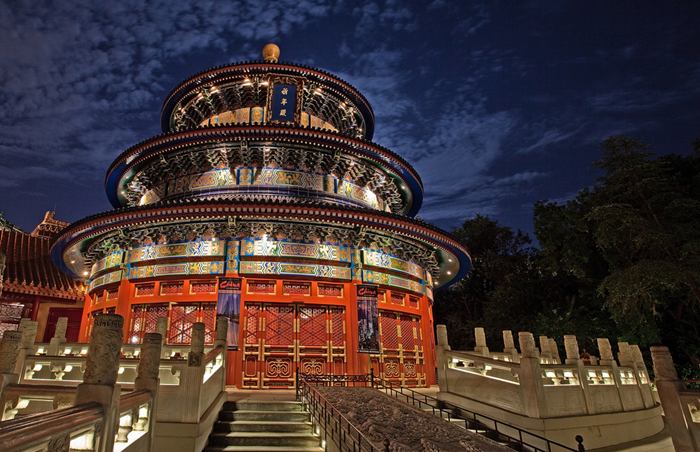
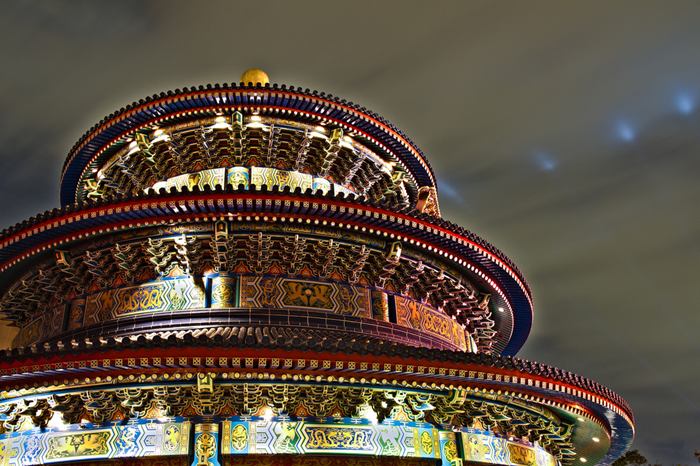
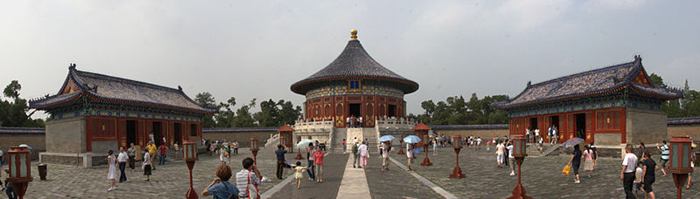
The Temple of Heaven, literally the Altar of Heaven is a complex of religious buildings situated in the southeastern part of central Beijing. The complex was visited by the Emperors of the Ming and Qing dynasties for annual ceremonies of prayer to Heaven for good harvest. It has been regarded as a Taoist temple, although Chinese Heaven worship, especially by the reigning monarch of the day, pre-dates Taoism.
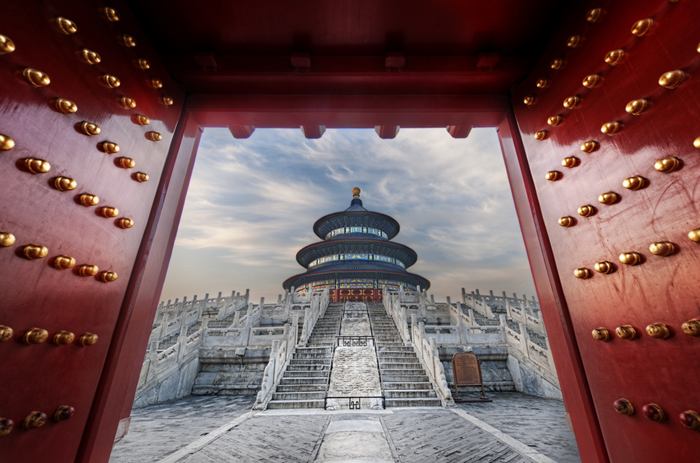
Photo  Link — Flickr/Stuck in Customs
The temple complex was constructed from 1406 to 1420 during the reign of the Yongle Emperor, who was also responsible for the construction of the Forbidden City in Beijing. The complex was extended and renamed Temple of Heaven during the reign of the Jiajing Emperor in the 16th century. The Jiajing Emperor also built three other prominent temples in Beijing, the Temple of Sun in the east, the Temple of Earth in the north, and the Temple of Moon in the west . The Temple of Heaven was renovated in the 18th century under the Qianlong Emperor. Due to the deterioration of state budget, this became the last large-scale renovation of the temple complex in the imperial time.
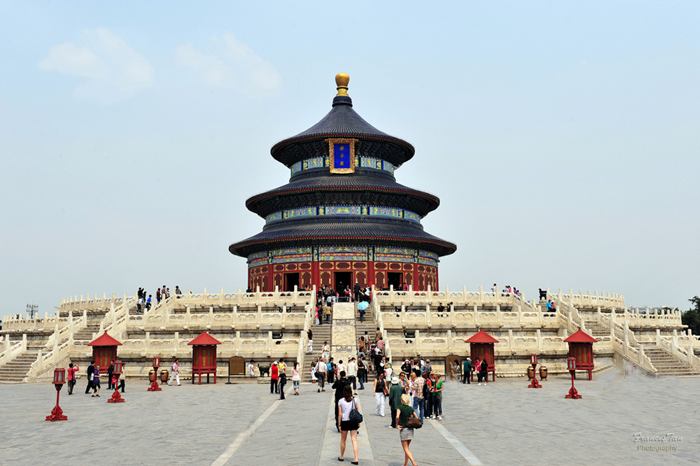
The Temple of Heaven, literally the Altar of Heaven is a complex of religious buildings situated in the southeastern part of central Beijing. The complex was visited by the Emperors of the Ming and Qing dynasties for annual ceremonies of prayer to Heaven for good harvest. It has been regarded as a Taoist temple, although Chinese Heaven worship, especially by the reigning monarch of the day, pre-dates Taoism.
Photo  Link — Flickr/FrAnTaStiK
The temple was occupied by the Anglo-French Alliance during the Second Opium War. In 1900, during the Boxer Rebellion, the Eight Nation Alliance occupied the temple complex and turned it into the force's temporary command in Beijing, which lasted for one year. The occupation desecrated the temple and resulted in serious damage to the building complex and the garden. Robberies of temple artifacts by the Alliance were also reported. With the downfall of the Qing, the temple complex was left unmanaged. The neglect of the temple complex led to the collapse of several halls in the following years.
The Temple of Heaven, literally the Altar of Heaven is a complex of religious buildings situated in the southeastern part of central Beijing. The complex was visited by the Emperors of the Ming and Qing dynasties for annual ceremonies of prayer to Heaven for good harvest. It has been regarded as a Taoist temple, although Chinese Heaven worship, especially by the reigning monarch of the day, pre-dates Taoism.
Photo  Link — Flickr/Stuck in Customs
In 1914, Yuan Shikai, then President of the Republic of China, performed a Ming prayer ceremony at the temple, as part of an effort to have himself declared Emperor of China. In 1918 the temple was turned into a park and for the first time open to the public.
The Temple of Heaven was inscribed as a UNESCO World Heritage Site in 1998 and was described as "a masterpiece of architecture and landscape design which simply and graphically illustrates a cosmogony of great importance for the evolution of one of the world’s great civilizations..." as the "symbolic layout and design of the Temple of Heaven had a profound influence on architecture and planning in the Far East over many centuries." The surroundings of the Temple of Heaven are now a very popular park for exercising. Wiki
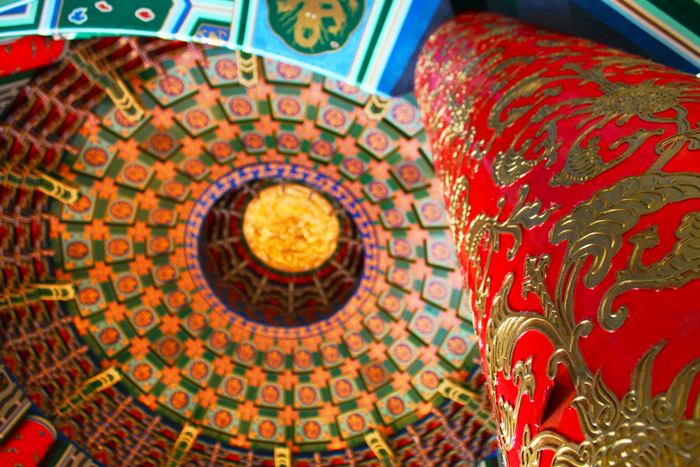
The Temple of Heaven, literally the Altar of Heaven is a complex of religious buildings situated in the southeastern part of central Beijing. The complex was visited by the Emperors of the Ming and Qing dynasties for annual ceremonies of prayer to Heaven for good harvest. It has been regarded as a Taoist temple, although Chinese Heaven worship, especially by the reigning monarch of the day, pre-dates Taoism.
Photo  Link — Flickr/Gary Burke
The Temple of Heaven, literally the Altar of Heaven is a complex of religious buildings situated in the southeastern part of central Beijing. The complex was visited by the Emperors of the Ming and Qing dynasties for annual ceremonies of prayer to Heaven for good harvest. It has been regarded as a Taoist temple, although Chinese Heaven worship, especially by the reigning monarch of the day, pre-dates Taoism.
Photo  Link — Flickr/Cory Disbrow
The Temple of Heaven, literally the Altar of Heaven is a complex of religious buildings situated in the southeastern part of central Beijing. The complex was visited by the Emperors of the Ming and Qing dynasties for annual ceremonies of prayer to Heaven for good harvest. It has been regarded as a Taoist temple, although Chinese Heaven worship, especially by the reigning monarch of the day, pre-dates Taoism.
Photo  Link — Flickr/jazzpic
The Temple of Heaven, literally the Altar of Heaven is a complex of religious buildings situated in the southeastern part of central Beijing. The complex was visited by the Emperors of the Ming and Qing dynasties for annual ceremonies of prayer to Heaven for good harvest. It has been regarded as a Taoist temple, although Chinese Heaven worship, especially by the reigning monarch of the day, pre-dates Taoism.
Photo  Link — Flickr/SpreadTheMagic
The Temple of Heaven, literally the Altar of Heaven is a complex of religious buildings situated in the southeastern part of central Beijing. The complex was visited by the Emperors of the Ming and Qing dynasties for annual ceremonies of prayer to Heaven for good harvest. It has been regarded as a Taoist temple, although Chinese Heaven worship, especially by the reigning monarch of the day, pre-dates Taoism.
Photo  Link — Wiki

Thursday, 6 December 2012

Paris Hilton visits Siddhivinayak

Paris Hilton
Experiencing spirituality at the famed Siddhivinayak temple here was "amazing" for international socialite Paris Hilton, who was here on a brief trip. (Source: Agencies)
"Went to the Siddhivinayak temple for a blessing. Amazing to be in such a spiritual and special place. Blessed," she tweeted.

Hilton, who wore a saffron stole printed with Sanskrit shlokas around her neck and a saffron bindi on her forehead, walked barefoot for at least 20 metres to enter the shrine
Paris Hilton
Narayan Kale, the priest who helped her with the puja at the temple's sanctum sanctorum, said she prayed to Ganapati Bappa eyes closed and hands folded. "We gave her prasadam… she accepted it devoutly with both hands. Then she went to the two giant silver mice (the god's mount) in the temple and whispered her wishes into their ears."
Paris Hilton
Paris HiltonParis Hilton
Ballu Shinde was, however, dead serious. The stall owner entrusted with the shoes and sandals of members of Hilton's entourage was sure the visitor was the US secretary of state. Hilton, he thought, was kind of an abbreviation of Hillary and Clinton.
Paris HiltonParis HiltonParis HiltonParis Hilton 

Monday, 30 July 2012

Maijishan Grottoes in China


 The Maijishan Grottoes are a series of 194 caves cut in the side of the hill of Majishan in Tianshui, Gansu Province, northwest China. This example of rock cut architecture contains over 7,200 Buddhist sculptures and over 1,000 square meters of murals. Construction began in the Later Qin era (384-417 CE).  


 They were first properly explored in 1952-53 by a team of Chinese archeologists from Beijing, who devised the numbering system still in use today. Caves #1-50 are on the western cliff face; caves #51-191 on the eastern cliff face. They were later photographed by Michael Sullivan and Dominique Darbois, who subsequently published the primary English-language work on the caves noted in the footnotes below.


 The name Maijishan consists of three Chinese words that literally translate as "Wheatstack Mountain", but because the term "mai" (?) is the generic term in Chinese used for most grains, one also sees such translations as "Corn rick mountain". Mai means "grain". Ji means "stack" or "mound". Shan means "mountain". The mountain is formed of purplish red sandstone.  They are just one of the string of Buddhist grottoes that can be found in this area of northwest China, lying more or less on the main routes connecting China and Central Asia.


Via — Link

Wednesday, 30 June 2010

Buddhist Temple Built with 1.5M Recycled Beer Bottles

Buddhist Temple Built with 1.5M Recycled Beer Bottles
Built using more than a million beer bottles, this incredible temple in the north-east of Thailand is a novel way to recycle any empties. The resident Buddhist monks at the Wat Pa Maha Chedi Kaew complex encourage local authorities to deposit any used bottles at the temple which they then use to build new structures. Having already built the a temple and even shelters, the monks who live in the town of Khun Han really have got into the spirit of recycling.

Buddhist Temple Built with 1.5M Recycled Beer Bottles
Buddhist temple Glass houses: There are 20 buildings made of bottles in the complex
Sometimes known as Wat Lan Kuad, or Temple Of A Million Bottles, the temple uses the discarded bottles to construct everything from the crematorium to the toilets. Altogether there are about 1.5million recycled bottles in the temple, and the monks at there are intending to recycling even more. 'The more bottles we get, the more buildings we make,' says Abbot San Kataboonyo.Buddhist temple
Buddhist Temple Built with 1.5M Recycled Beer Bottles
Buddhist temple Room with an interior view: The visitors' toilets are a unique spectacle
'They kept this up until they had nearly one million recycled bottles ready to construct their pagodas and temple. 'Even though drinking is a sin in Buddhism, this still seems like a positive use of beer and lager bottles.' Representing the cleansing of the human mind, the beer-bottle-temple is now on an approved list of eco-friendly sightseeing tours in South-East Asia.
Buddhist Temple Built with 1.5M Recycled Beer Bottles

Buddhist Temple Built with 1.5M Recycled Beer Bottles

Buddhist Temple Built with 1.5M Recycled Beer Bottles

Buddhist Temple Built with 1.5M Recycled Beer Bottles

Buddhist Temple Built with 1.5M Recycled Beer Bottles

Buddhist Temple Built with 1.5M Recycled Beer Bottles

Buddhist Temple Built with 1.5M Recycled Beer Bottles

Buddhist Temple Built with 1.5M Recycled Beer Bottles

Buddhist Temple Built with 1.5M Recycled Beer Bottles

Buddhist Temple Built with 1.5M Recycled Beer Bottles

Buddhist Temple Built with 1.5M Recycled Beer Bottles

Buddhist Temple Built with 1.5M Recycled Beer Bottles

Buddhist Temple Built with 1.5M Recycled Beer Bottles

Buddhist Temple Built with 1.5M Recycled Beer Bottles

Buddhist Temple Built with 1.5M Recycled Beer Bottles

Buddhist Temple Built with 1.5M Recycled Beer Bottles

Buddhist Temple Built with 1.5M Recycled Beer Bottles

Buddhist Temple Built with 1.5M Recycled Beer Bottles

Buddhist Temple Built with 1.5M Recycled Beer Bottles

Saturday, 26 June 2010

Famous Hindu Temples In India

Yamnotri Temple
Vrindavan Temple
Varanasi Ganga Ghat
Vaishno Devi Temple
Uttarkashi Temple
Rameshwaram Temple
Rishikesh Temple
Rudraprayag Temple
Tirupati Balaji Temple
Kedarnath Temple
Kanyakumari Temple
Jagannath Mandir Puri
Jagannath Puri Temple
Himachal Pradesh Temple
Haridwar Temple
Gangotri Temple
Dakshineshwar Kali Temple
Badrinath Temple
Ayodhya Temple
Amarnath Temple