Showing posts with label Tragic Happenings. Show all posts

Monday, 29 April 2013

WHY IS THE CHILD IN HANDS OF THE BEGGARS ALWAYS SLEEPING??????????????

"Why is sleeping child in the hands of beggars? Have you ever wondered ... "

This article I read a few months ago. Who is the author of, I don't know.
Please read…..

""Near the metro station sits a woman of uncertain age.
Women’s hair
is confused and dirty, her head bowed in grief.

The woman sits on the dirty floor and next to her lies a bag. In that bag
people throw money. On the hands of a woman, asleep, is a two year old baby. He's in a dirty hat and dirty clothes.


“Madonna with baby” - numerous passers-by will donate money. The people of our kind- we always feel sorry for less fortunate. We are ready to give unfortunate people the last shirt, the last penny out of your pocket and never think another issue.
Helping, seems like. “Good job done”...

I walked past a beggar for a month. Did not give any money, as I knew that this is a gang operated scam and money collected by the beggar will be given to whoever controls beggars in the area. Those people own numerous luxury properties and cars.
Oh and beggar also gets something, of course “ A bottle of vodka in the evening and a döner kebab”.
A month later, walking past the beggars, as shock, it suddenly
hit me….
I'm staying at a busy crossing, stared at the baby, dressed as always- dirty track suit. I realized that it
seemed "wrong", finding a child in a dirty underground station from morning to evening.
The baby slept. Never sobbed or screamed, always asleep, burying his face in the knee of a woman who was his MUM.

Do any of you, dear readers, have children? Remember how often they
slept at the age of 1-2-3 years? Hour two, maximum three (not consecutive)
afternoon nap, and again – movement. For the whole month, every day of my
walking in the underground, I've never seen a child awake! I looked
at the tiny little man, with his face buried in the knee of his mother, then at the beggar, and my
suspicion was gradually formed.
– Why he sleeps all the time? I asked, staring at the baby.

The beggar pretended not to hear me. She lowered her eyes and
hid her face in the collar of her shabby jacket. I repeated the question. The woman again
looked up. She looked somewhere behind my back, tired with utter irritation. Her look was similar to the creatures from a different planet.
-F **k off ... her lips murmured.
-Why is he asleep?! I almost cried ...

Behind me someone put his hand on my shoulder. I looked back. A some old man was looking at me disapprovingly:

– What do you want from her? Can’t you see how hard she’s got it in her life… Eh …
He gets some coins from his pocket and throws them in the beggar’s bag.

Beggar made a hand wave of a cross, portraying the face of humility and universal
grief. The guy removed his hand from my shoulder and strolled out of the underground station.
I bet, at home, he will tell how he defended poor, distraught woman from a soulless man in a tube station.

Next day I called a friend. It was a funny man with eyes like olives Romanian nationality. He only managed to complete three and a half years of education. The complete lack of education does not prevent him from moving around the
City streets on very expensive foreign cars and live in a “small” house with countless number of windows and balconies. From my friend I managed to find out that this business, despite the apparent
spontaneity, clearly organized. Its supervised by begging organized crime rings. The children used are in "rent"
from families of alcoholics, or simply stolen.
I needed to get the answer to the question – why is the baby sleeping? And I received it. My friend Gypsy said the phrase, completely ordinary with calm voice that twisted me in shock, just like he was talking about weather report:
-They are on heroin, or vodka ...
I was dumbfounded. "Who is on heroin? Whom – under vodka?! "
He answered
-The Child, so he doesn’t scream. The women will be sitting whole day with him, imagine how he might get bored?

In order to make the baby slept the whole day, it pumped up with vodka or drugs. Of course, children's bodies are not able to cope with such a shock. And children often die. The most terrible thing – sometimes children die
during the "working day". And imaginary mother must hold another dead child on her hands until the evening. These are the rules. And the by passers-by will throw some money in the bag, and believe that they are moral. Helping
"mother alone" …
… The next day I was walking near the same underground station. I stocked up journalistic identity, and was ready for a serious conversation. But the conversation didn't work out. But turned out the following ...
A woman was sitting on the floor and in her hands she was holding a child. I asked her a question about the documents on the child, and, most importantly, where was yesterday's kid, which she simply ignored.
My questions were not ignored by passers-by. I was told that I was out of my mind screaming at poor beggar with a child. All in all, I was escorted out of the tube station in disgrace. One thing remained was to call the police. When police arrived, beggar with the baby disappeared. I stood with a full sense of - “I'm trying to fight windmills”.

When you see in the subway, on the street whether women with children,
begging, think before your hand climb for money. Think about that, if it wasn't for your hundreds of thousands of handouts, the business like this would have died. The business would die and not the children-inflated with vodka or
drugs. Do not look at the sleeping child with affection. See horror… Since you're reading this article, you know now- why the child is sleeping in beggars hands.

P.S.
If you copy this article on your wall or just click "Share", your friends will read it too.
And when you decide again to open your wallet to throw a coin to a beggar, remember that this
charity could cost another child's life.""

Monday, 14 June 2010

Tragic happenings-When animals attack!

amazing-pictures
amazing-pictures

Tragic happenings-Merciless killing of Dolphins

Below are some shocking pictures of dolphins killed mercilessly in Denmark.

tragic-happeningsWhile it may seem incredible, even today this custom continues, in Dantesque, in the Faroe Islands, ( Denmark ) . A country supposedly 'civilized' and an EU country at that.
tragic-happeningsFor many people this attack to life is unknown– a custom to 'show' entering adulthood. It is absolutely atrocious.
tragic-happeningsNo one does anything to prevent this barbarism being committed against the Calderon, a highly intelligent dolphin that is placid, and approaches humans out of friendliness.
tragic-happenings
tragic-happenings

tragic-happenings

Tragic happenings-Boy loses arm for stealing

In one of the most barbaric acts in recent times, a boy in Iran is punished for stealing by running a car over his arm......
Truly shocking images!
tragic-happeningstragic-happeningstragic-happeningstragic-happeningstragic-happeningstragic-happenings

Tragic happenings-Commercial plane disaster

A commercial jet disaster of an airplane on fire putting the passengers in peril in this runway catastrophe picture. The flames engulf the cockpit area too.

tragic-happenings

Thursday, 10 June 2010

Photographs that shook the world: Omayra Sanchez

Many see this photo from 1985 as the beginning of what we nowadays call "media globalization", because Omayra Sanchez's agony was followed by television cameras from all over the world. Despite all the footage that was recorded by those tv cameras, it was this photograph, of a shocking reality and humanity, that went down in history as the first broadcast of the pain and death of a human being.


Omayra Sanchez, 13 years old, was the victim of volcano Nevado del Ruiz's eruption in 1985, that devasted the Armero village, in Colombia. Omayra was trapped for three days under the mud, clay and water that was left from her own house. When the paramedics, with scarce resources, tried to help her, they sadly realized there was nothing they could do, since to remove her from the deadly trap they would have to amputate her legs and the lack of a speacilist on the scene would result in her death.

According to the paramedics and the journalists that surrounded her, Omayra was strong until the last minute of her life. For the three days her agony lasted she thought only about going back to school, her studies and her friends. Photographer Frank Fournier took this photo of Omayra that travelled the world and generated a worldwide controversy about the indifference of the Colombian government before the victims of natural disasters such as this.
The photograph was published months after the girl's death and Frank Fournier was awarded the 1986 World Press Photo Premier Award for this picture

Read more: http://obviousmag.org/en/archives/2008/08/photographs_that_shook_the_world_omayra_sanchez.html#ixzz0qWauV96P
published in photography by jr on Aug 28 2008

Monday, 7 June 2010

After 26 years, 8 accused found guilty for Bhopal gas tragedy

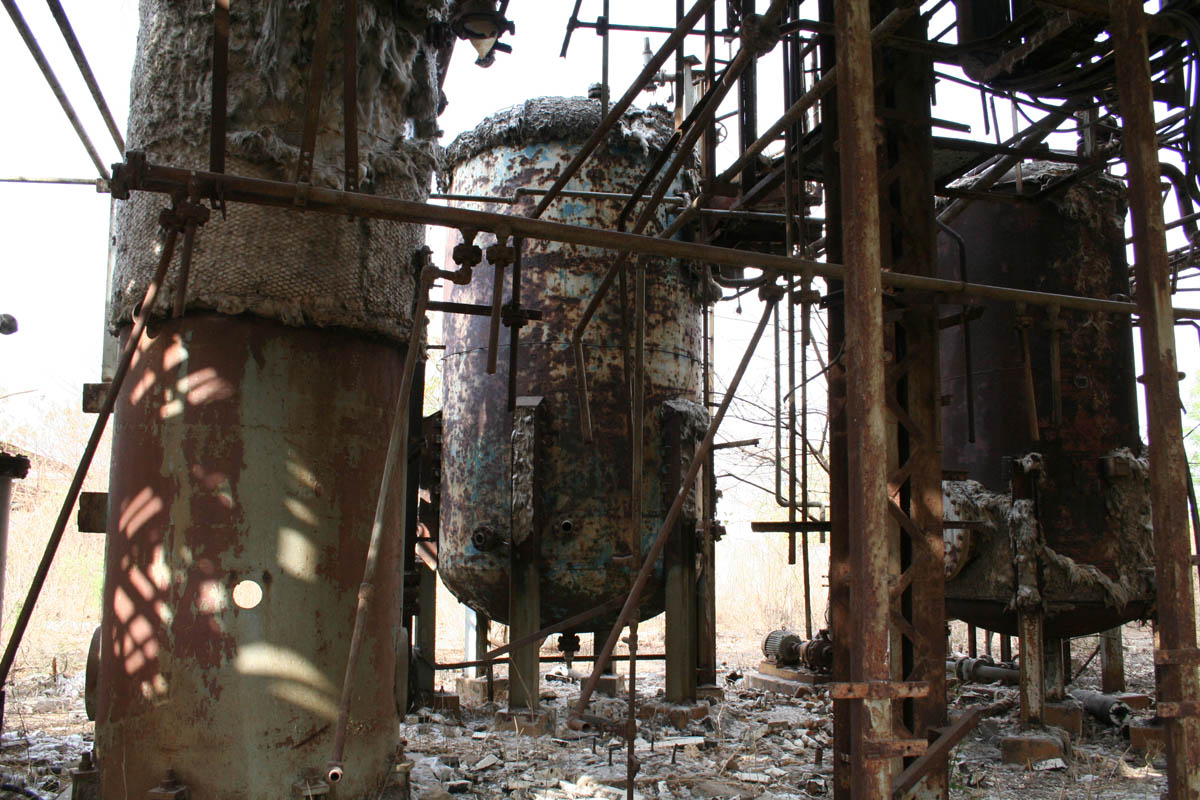
Image: The Union Carbide Corp pesticide plant in Bhopal
Photographs: Reinhard Krause/Reuters

Twenty-six years after one of the worst industrial disasters in the world -- the Bhopal gas tragedy -- claimed thousands of lives, a local court found all the eight accused guilty of criminal negligence in the case.

Chief Justice Magistrate Mohan P Tiwari convicted all the eight accused of criminal negligence for the toxic leak from the Bhopal factory of Union Carbide India Limited (now defunct), after the arguments of the prosecution -- the Central Bureau of Investigation -- and defence of eight accused drew to a close in the 23-year-old trial on May 13.
The accused in the case include Keshub Mahindra, the then chairman of UCIL, Vijay Gokhle, then managing director of UCIL, Kishore Kamdar, then former vice president of UCIL-Mumbai, J Mukund, then former works manager of UCIL-Mumbai, S P Chouhary, then production manager of UCIL-Mumbai, K V Shetty, then plant superintendent of UCIL-Mumbai, SI Qureshi, the then production assistants of UCIL-Mumbai.
The accused have been tried under Indian Penal Code sections including Section 304 (A) (causing death by negligence, 336 (acts endangering life or personal safety of others) and 337 (causing hurt by act endangering life or personal safety of others).
Warren Anderson, former chairman of Union Carbide Corporation, USA has been absconding in the case.


Realated Articles:-Bhopal disaster

Bhopal Disaster-Summary of background and causes

The Bhopal disaster was an industrial catastrophe that occurred at a pesticide plant owned and operated by Union Carbide (UCIL) in Bhopal, Madhya Pradesh, India. Around midnight on the intervening night of December 2–3, 1984, the plant released methyl isocyanate (MIC) gas and other toxins, resulting in the exposure of over 500,000 people. Estimates vary on the death toll. The official immediate death toll was 2,259 and the government of Madhya Pradesh has confirmed a total of 3,787 deaths related to the gas release. Other government agencies estimate 15,000 deaths. Others estimate that 8,000 died within the first weeks and that another 8,000 have since died from gas-related diseases.
Some 25 years after the gas leak, 390 tons of toxic chemicals abandoned at the UCIL plant continue to leak and pollute the groundwater in the region and affect thousands of Bhopal residents who depend on it, though there is some dispute as to whether the chemicals still stored at the site pose any continuing health hazard. There are currently civil and criminal casesclarification needed] related to the disaster ongoing in the United States District Court, Manhattan and the District Court of Bhopal, India against Union Carbide,[8][not in citation given] now owned by Dow Chemical Company, with an Indian arrest warrant pending against Warren Anderson, CEO of Union Carbide at the time of the disaster. No one has yet been prosecuted.

Summary of background and causes

The UCIL factory was established in 1969 near Bhopal. 50.9% was owned by Union Carbide Corporation (UCC) and 49.1 % by various Indian investors, including public sector financial institutions. It produced the pesticide carbaryl (trademark Sevin). In 1979 a methyl isocyanate (MIC) production plant was added to the site. MIC, an intermediate in carbaryl manufacture, was used instead of less hazardous but more expensive materials. UCC understood the properties of MIC and its handling requirements.
During the night of December 2–3, 1984, large amounts of water entered tank 610, containing 42 tonnes of methyl isocyanate. The resulting exothermic reaction increased the temperature inside the tank to over 200 °C (392 °F), raising the pressure to a level the tank was not designed to withstand. This forced the emergency venting of pressure from the MIC holding tank, releasing a large volume of toxic gases into the atmosphere. The gases flooded the city of Bhopal, causing great panic as people woke up with a burning sensation in their lungs. Thousands died immediately from the effects of the gas and many were trampled in the panic.
Theories of how the water entered the tank differ. At the time, workers were cleaning out pipes with water, and some claim that owing to bad maintenance and leaking valves, it was possible for the water to leak into tank 610. In December 1985 The New York Times reported that according to UCIL plant managers the hypothesis of this route of entry of water was tested in the presence of the Central Bureau Investigators and was found to be negative. UCC also maintains that this route was not possible, and that it was an act of sabotage by a "disgruntled worker" who introduced water directly into the tank. However, the company's investigation team found no evidence of the necessary connection. The Trade Union Report failed to mention that the investigation was totally controlled by the government investigators denying UCC investigators any access to inspecting the ill-fated tank.
The 1985 reports give a picture of what led to the disaster and how it developed, although they differ in details.

Factors leading to the gas leak include:
  • The use of hazardous chemicals (MIC) instead of less dangerous ones
  • Storing these chemicals in large tanks instead of over 200 steel drums.
  • Possible corroding material in pipelines
  • Poor maintenance after the plant ceased production in the early 1980s
  • Failure of several safety systems (due to poor maintenance and regulations).
  • Safety systems being switched off to save money—including the MIC tank refrigeration system which alone would have prevented the disaster.
The problem was made worse by the plant's location near a densely populated area, non-existent catastrophe plans and shortcomings in health care and socio-economic rehabilitation. Analysis shows that the parties responsible for the magnitude of the disaster are the two owners, Union Carbide Corporation and the Government of India, and to some extent, the Government of Madhya Pradesh.                Source:

25th anniversary of the Bhopal Disaster

Twenty-five years ago this week, in the early hours of Dec. 3, 1984, large amounts of water entered a tank at the Union Carbide factory in Bhopal, India. That water reacted with the 42 tons of methyl isocyanate inside, raising temperature and pressure so high that it began venting massive amounts of gas made up of methyl isocyanate, phosgene, hydrogen cyanide and more. The poisonous cloud swept through neighborhoods near the boundary wall, waking sleeping residents with burning throats and eyes, killing about 4,000 people in the first few hours. Over the next few years, the lingering effects increased that toll to about 15,000 dead, according to government estimates. A quarter-century later thousands of people are still grappling with the effects of the world's worst industrial accident and the continued contamination. Union Carbide was bought by Dow Chemical in 2001, and Dow claims the legal case was resolved in 1989, with responsibility for continued cleanup now falling to the local state government. (28 photos total)

A policeman points to the gas tank which vented its contents into the atmosphere in 1984, at the site of the deserted Union Carbide factory on November 28, 2009 in Bhopal, India. Twenty-five years after a massive gas leak at the Union Carbide factory in Bhopal killed thousands, toxic material from the 'biggest industrial disaster in history' continues to affect Bhopalis. A new generation is growing up sick, disabled and struggling for justice. The effects of the disaster on the health of generations to come, both through genetics, transferred from gas victims to their children and through the ongoing severe contamination, caused by the Union Carbide factory, has only started to develop visible forms recently. (Daniel Berehulak/Getty Images)


2
In a file picture taken on December 4, 1984 soldiers guard the entrance of Union Carbide factory in Bhopal after a deadly poison gas leak. Survivors of the world's worst industrial disaster in India's Bhopal city were outraged by (now cancelled) plans to throw open the site to visitors 25 years after the tragedy that killed thousands. (BEDI/AFP/Getty Images) #


3
This photograph from December 4, 1984 shows victims who lost their sight in the Bhopal poison gas tragedy as they sit outside the Union Carbide factory in Bhopal, India. (AFP/AFP/Getty Images) #


4
This December 4, 1984 photograph shows blinded victims of the Bhopal tragedy as they sit in the street and wait to be treated at Bhopal hospital after a deadly poisonous gas leak from the Union Carbide factory. (BEDI/AFP/Getty Images) #

5
In this Nov. 21, 2009 photo, defunct machinery is seen at the Union Carbide pesticide plant. (AP Photo/Saurabh Das) #


6
A gaping hole in a rusting container is seen at the Union Carbide pesticide plant, on November 21, 2009. (AP Photo/Saurabh Das) #

7
A security worker cycles past what remains of the Union Carbide pesticide plant in Bhopal, India on November 21, 2009. (AP Photo/Saurabh Das) #

8
Discarded bottles of chemicals lay on the floor in a building at the site of the deserted Union Carbide factory on November 28, 2009 in Bhopal, India. (Daniel Berehulak/Getty Images) #

9
A boy struggles to take a calf grazing inside the Union Carbide factory compound, seen through a broken wall in Bhopal, India on November 20, 2009. (AP Photo/Saurabh Das) #

10
Women fill containers with clean water, as it is shipped in due to the local water being contaminated, near the site of the deserted Union Carbide factory on November 28, 2009 in Bhopal, India. (Daniel Berehulak/Getty Images) #


11
Activists and survivors of the 1984 Bhopal gas leak disaster that killed and harmed thousands hold placards against Dow Chemical Company outside it's office in Noida, on the outskirts of New Delhi, India, Thursday, Nov. 19, 2009. A subsidiary of U.S. chemical company Union Carbide ran the plant at the time of the accident. For decades, survivors have been fighting to have the site cleaned up, but they say the efforts were slowed when Michigan-based Dow Chemical Co. took over Union Carbide in 2001. Dow says it is not responsible for cleaning up the site. (Staffing/Manish Swarup) #

12
Activists from Bhopal Gas Tragedy Survivors Group burn effigies as they protest against Union Carbide Corp, ahead of the 25th anniversary of the 1984 Bhopal gas tragedy, in the central Indian city of Bhopal November 29, 2009. (REUTERS/Raj Patidar) #

13
Activists and survivors of the 1984 Bhopal gas leak disaster that killed and harmed thousands more protest against Dow Chemical Company outside it's office in Noida, on the outskirts of New Delhi, India, Thursday, Nov. 19, 2009. (Staffing/Manish Swarup) #

A policeman looks on as he tours the site of the deserted Union Carbide factory on November 28, 2009 in Bhopal, India. (Daniel Berehulak/Getty Images) #

15
People walk past a statue of a mother holding a dead child in her arms in Bhopal, India on November 18, 2009. Residents are bitter whenever they glance behind their homes toward the old Union Carbide factory, where a lethal plume of gas escaped from a storage tank in the early hours of December 3, 1984, killing thousands instantly. Survivors say the anniversary marks another year of physical and psychological trauma compounded by government and corporate negligence. (RAVEENDRAN/AFP/Getty Images) #


16
8 year old Annan is carried by Nafiza Bee, coordinator of the Chingari Trust clinic on November 27, 2009 in Bhopal, India. Twenty-five years after an explosion causing a mass gas leak killed thousands, toxic material from the biggest industrial disaster in history continues to affect Bhopalis. Annan suffers from cerebral palsy and receives vital rehabilitative support and care at the Chingari Trust Clinic. (Daniel Berehulak/Getty Images) #

17
Ten year old Nawab Mian, suffering from mental illness related to the 1984 Bhopal gas disaster, plays with a small chick near the site of the deserted Union Carbide factory on November 28, 2009 in Bhopal, India. (Daniel Berehulak/Getty Images) #

18
Apeksha Malviya is fed at her home in Bhopal, India on November 22, 2009. A quarter century after the disaster, many of those who were exposed to the gas have given birth to physically and mentally disabled children. (AP Photo/Saurabh Das) #

19
Children are reflected in groundwater, believed to be contaminated, near the site of the deserted Union Carbide factory on November 28, 2009 in Bhopal, India. (Daniel Berehulak/Getty Images) #

20
This Saturday, Nov. 21, 2009 photograph shows a cow, the sole living being that was found at a government hospital dedicated to gas victims in Bhopal, India. (AP Photo/Saurabh Das) #


21
People carry potable water collected from inside the premises of Union Carbide factory in Bhopal, India on November 21, 2009. (AP Photo/Saurabh Das) #

Women complaining of ailments due to exposure to methyl isocyanate leaked during the Bhopal industrial disaster wait to consult doctor at a clinic run by a non governmental organization in Bhopal, India on November 20, 2009. (AP Photo/Saurabh Das) #

Razik pronounces words during a rehabilitation exercise with speech therapist Prem Patel at the Chingari Trust Rehabilitation clinic on November 27, 2009 in Bhopal, India. (Daniel Berehulak/Getty Images) #

24
In this Friday, Aug. 7, 2009 photograph, Hira Lal, who has lost the ability to move and hear, lays on a makeshift bed outside his shanty in Bhopal, India. (AP Photo/Saurabh Das) #

25
Children play in front of their homes near the Union Carbide factory on November 27, 2009 in Bhopal, India. (Daniel Berehulak/Getty Images) #


26
A man jumps off the perimeter wall at the site of the Union Carbide factory on November 28, 2009 in Bhopal, India. (Daniel Berehulak/Getty Images) #

27
In this Friday, Nov. 20, 2009 photograph, a physiotherapist holds the leg of a seven year old child at a clinic run by a non-governmental organization to cater to victims of the gas tragedy in Bhopal, India. (AP Photo/Saurabh Das) #

28
A girl stands near water towers outside her home near the site of the Union Carbide factory on November 27, 2009 in Bhopal, India. (Daniel Berehulak/Getty Images) #